

Methylation Testing and the Walsh Approach
Methylation Testing and the Walsh Approach
ADD DETAILS TO BUY
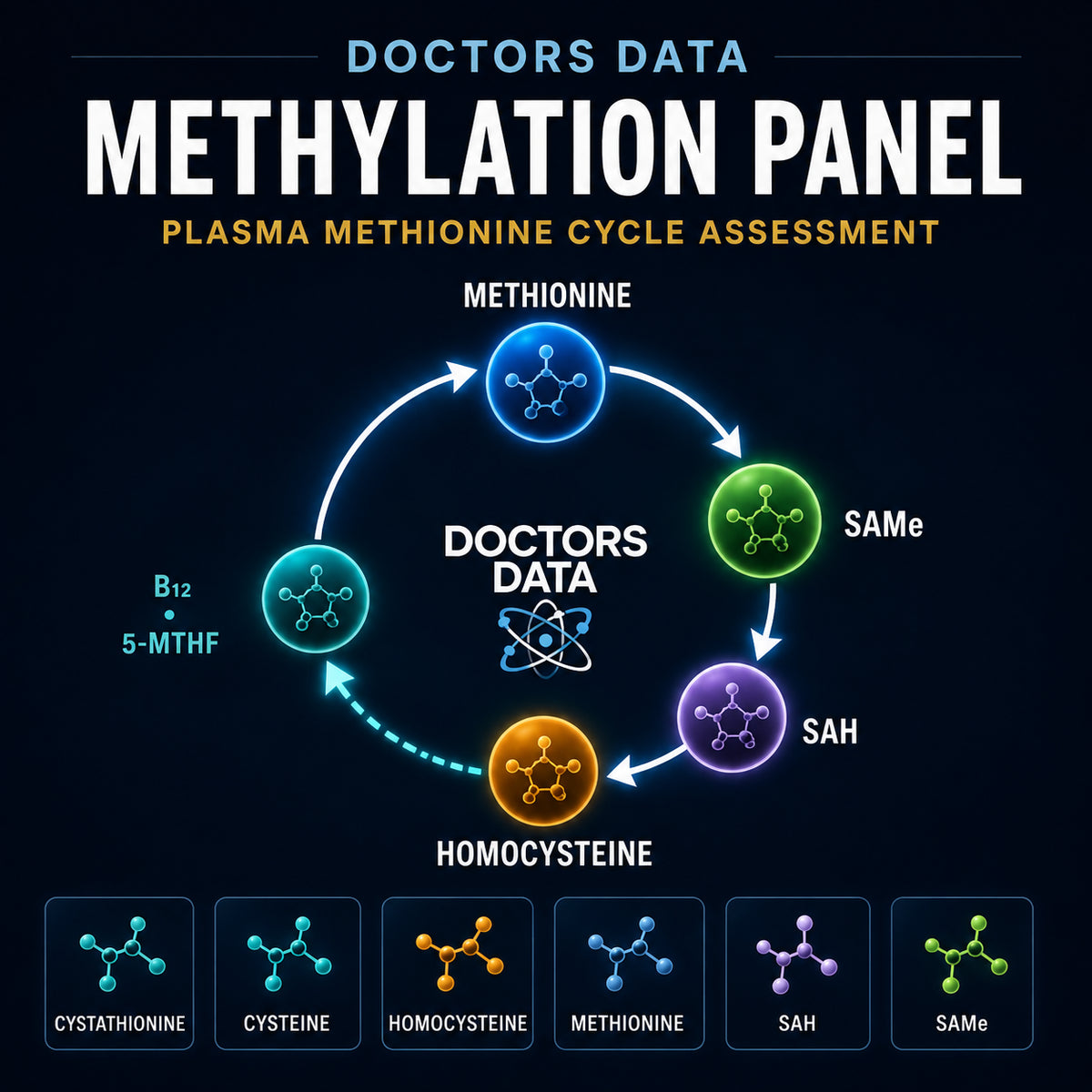
The Doctor’s Data Plasma Methylation Panel measures active methylation chemistry—including SAM, SAH, methionine, homocysteine, cystathionine, and cysteine—to help determine whether undermethylation is present and, more importantly, why methylation may be impaired.
It is a functional blood test that evaluates how well your body handles methionine metabolism, transmethylation, and transsulfuration pathways
Unlike MTHFR genetics, this test evaluates current biochemical function. It is especially useful when assessing the Walsh Approach to undermethylation and the Five Epigenetic Drivers of Undermethylation: toxin exposure, mitochondrial stress, creatine demand, methylation demand, and acidic pH with impaired clearance.
The Doctor’s Data Plasma Methylation Panel is a functional methylation blood test that measures what your methylation cycle is doing now. Rather than relying only on MTHFR or other genetic variants, it evaluates key metabolites involved in methyl-group production, utilization, recycling, and clearance.
This can be particularly useful when evaluating undermethylation, an important biochemical pattern within the Walsh Approach, or when symptoms and conventional laboratory findings suggest that methylation may not be functioning efficiently.
What Does the Plasma Methylation Panel Measure?
The panel provides a biochemical view of several interconnected portions of the methionine and trans-sulfuration pathways.
- SAM (S-adenosylmethionine) – the body’s principal methyl donor.
- SAH (S-adenosylhomocysteine) – a product of methylation that can inhibit methyltransferase reactions when it accumulates.
- SAM:SAH ratio – helps assess the relationship between methyl-donor availability and methylation inhibition.
- Methionine – the amino acid used to produce SAM.
- Homocysteine – a central intermediate that can be remethylated back toward methionine or directed toward transsulfuration.
- Cystathionine – provides information about movement of homocysteine through the transsulfuration pathway.
- Cysteine – an important downstream sulfur-containing amino acid and precursor involved in antioxidant metabolism.
Why Test Methylation Biochemistry Instead of Genetics Alone?
Genetic testing can identify inherited variants that may influence methylation, but genes do not necessarily show whether a pathway is currently impaired.
A person may have an MTHFR variant without significant biochemical dysfunction, while another person may have substantial methylation impairment despite relatively unremarkable genetic testing.
The important distinction is genetics versus biochemical performance. The Plasma Methylation Panel measures metabolites within the pathway and can therefore provide information about methylation activity occurring at the time of testing.
How This Test Helps Assess Undermethylation
Within the Walsh Approach, undermethylation has traditionally been assessed using clinical characteristics together with markers such as whole-blood histamine. Plasma methylation testing can add another layer by directly evaluating methylation chemistry.
Different biochemical patterns can have very different implications. Examples include:
Methylation: Methionine is first enzymatically converted to S-adnosylmethionine (SAM), the principal methyl donor for methylation of DNA, RNA, protein, phospholipids, creatinine and neurotransmitters. S-adenosylhomocysteine (SAH) is generated as a product of all SAM-dependent methylation reactions and is hydrolyzed to homocysteine (Hcy) and adenosine through a reversible reaction (AHCY). SAH is a potent inhibitor of all SAM-dependent methylation reactions. Efficient removal of adenosine and Hcy is imperative to prevent accumulation of SAH. The enzymatic activities of adenosine kinase, adenosine deaminase and 5'-nucleosidases contribute to maintaining normal levels of adenosine.
Transmethylation: Hcy is normally primarily removed or recycled by remethylation to methionine through a series of reactions that require 5-methyltetrahydrofolate, B12 and betaine to complete the normal methionine cycle. A low ratio of SAM to SAH is a sensitive indicator of under-methylation. elevated plasma Hcy is an independent risk factor for cardiovascular disease (CVD). Recent research suggests that elevated SAH may be an even better predictor of risk for CVD.
Transsulfuration: Methionine > Homocysteine > Cysteine The methionine transsulfuration pathway occurs primarily in the liver and kidneys, and diverts Hcy away from remethylation to methionine toward synthesis of conditionally essential amino acid cysteine, essential sulfate, taurine and glutathione. Homocysteine in the presence of serine and B6 is enzymatically converted to cystathionine and ultimately cysteine. Cysteine is the rate-limiting amino acid in the biosynthesis of quintessential glutathione (GSH). GSH is pivotal in the regulation of intracellular redox homeostasis, oxidative stress, immune function, DNA synthesis and repair, apoptosis and detoxification of metals and chemicals. The DDI Methylation Profile evaluates the plasma levels of methionine, cysteine, SAM, SAH, Hcy, adenosine and cystathionine, and provides the important "methylation index," a ration of SAM to SAH. The test results can facilitate appropriate individualized interventions to improve or normalize methionine metabolism and ameliorate or prevent adverse consequences associated with inadequate methylation and/or transsulfuration capacity.